

When we go on a journey to a land we’ve never visited before, there are expectations. We’re looking for new sights, new experiences, a new understanding of a different culture, and perhaps most viscerally we are looking for the flavour of the land. This comes in many different forms but the quickest way to really understand a culture is through its food. And Romania packs a culinary punch! It is so easy to explore Romanian cuisine with our Become a Romanian Epicurean Tour, but before you book that trip, here are some of the most delicious foods Romania has to offer.
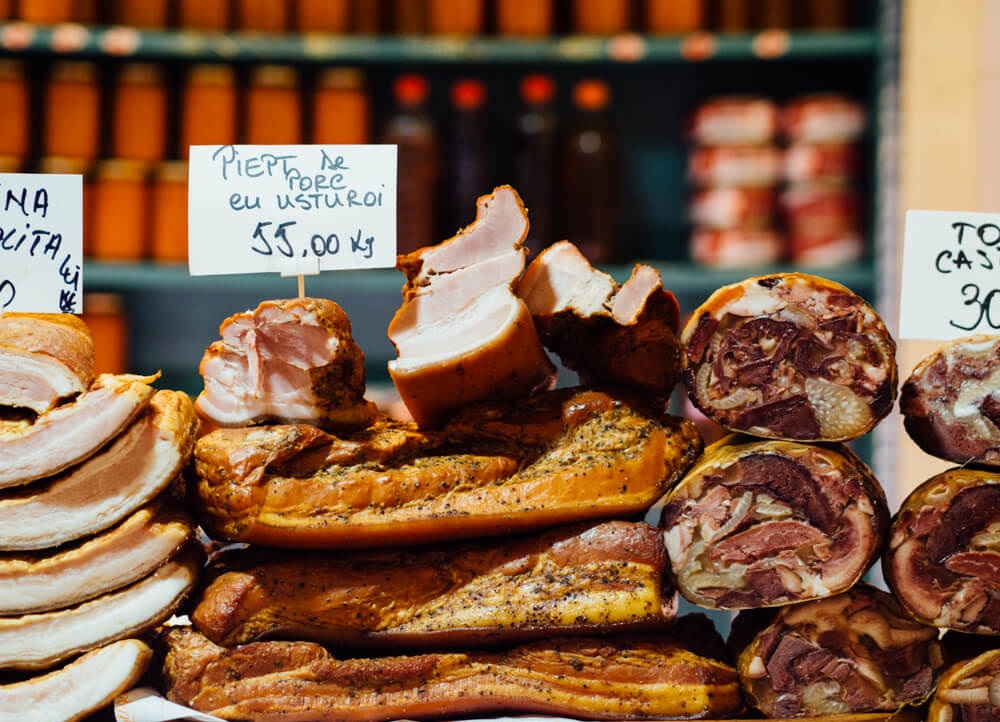
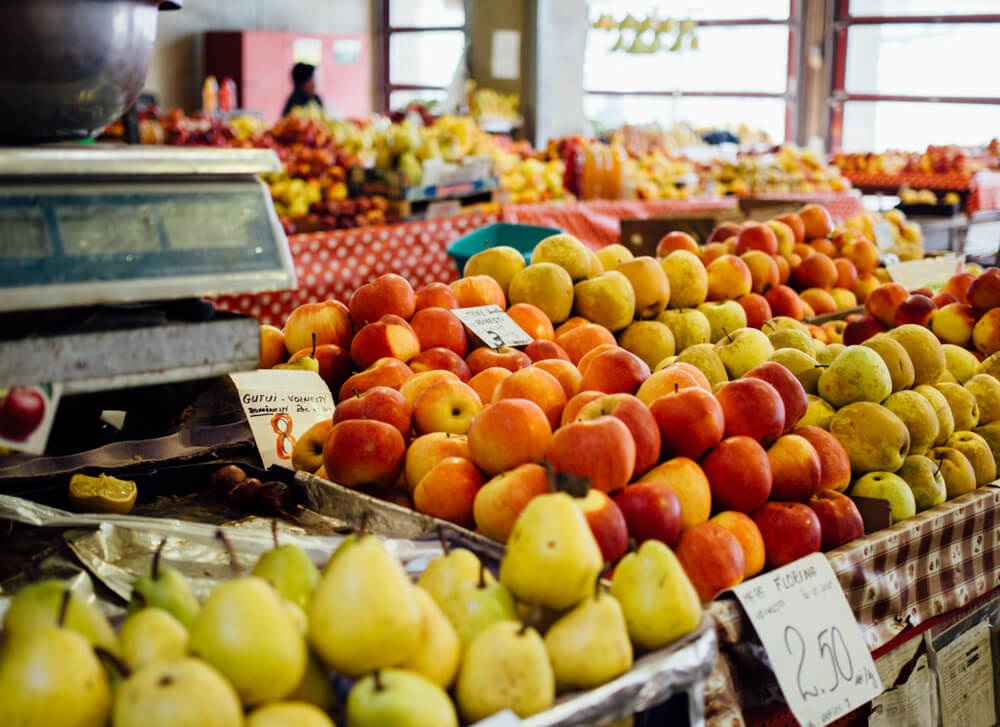
There are few things we like more than a morning visit to the market: piles of colourful vegetables and fruits, weird varieties of apples and even weirder varieties of herbs, smoked meats in all forms and shapes, kneaded cheeses of different textures and tastes, preserved goodies and artisanal bakeries, all ready to be washed down with local wines and beers.
We love our local markets and we think you will too, so we’ve “cooked up” a morning food market tour in the midst of the freshest, tastiest place in Bucharest: Obor market.
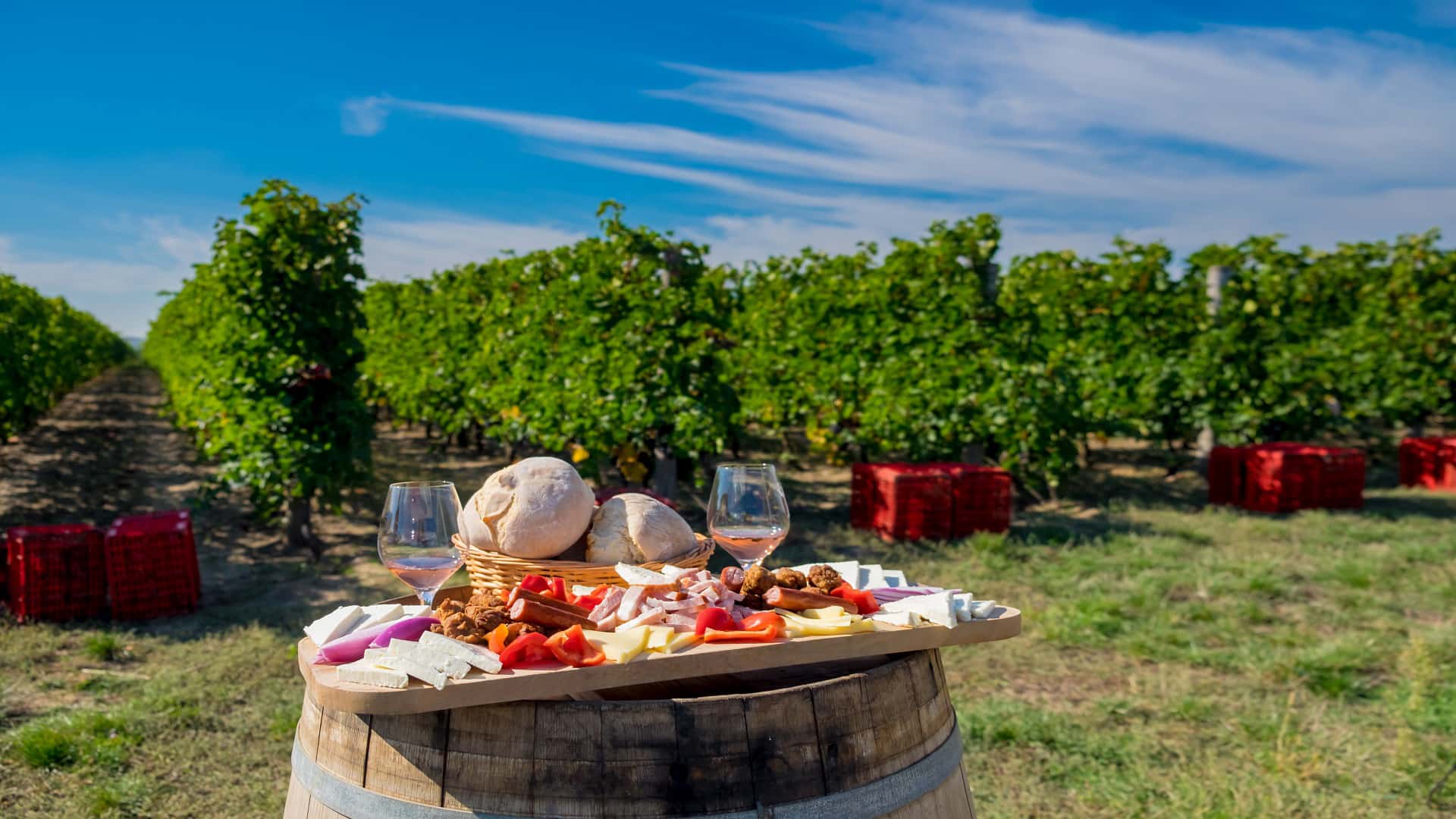
We’ll navigate amid little old ladies and self-sufficient farmers displaying the fruit of their land, ‘organic’ or at least produced with traditional farming methods. We’ll visit cheese and meat sellers, bakers and all kinds of vendors before ending the tour with a gourmet spread, wine-soaked words and cheerful toasts!
And in the process, you’ll learn about our ways of farming, natural food and bucolic cuisine, why we eat what we eat and how religion and traditions are reflected in our diet.
Interested? Then skip the souvenirs and take home a few extra pounds instead! There’s no better way to get up close and personal with a destination than eating your way through a local food market and trying to keep a straight face while you’re bursting at the seams…
We’ll save a place for you on our next food market tour & brunch in Bucharest, just in case 🙂
Fasole bătută or fasole făcăluită (literally ‘mashed beans’) or icre de fasole (‘roe of beans’) is a bean-based paste. This dip is traditionally made by mashing boiled beans and mixing them with vegetable oil, then adding some chopped onions. Some recipes call for garlic, chili pepper, lime or lemon juice, and additional seasonings.
Romanian refried beans, uses white or Cannellini beans, with the addition of olive or sunflower oil and minced garlic. The dish is traditionally served with fried onions as a garnish.
This vegetarian dish is eaten during Lent.
Roasted and peeled eggplant, chopped onions, and salt mixed with oil or mayonnaise
Caviar d’aubergine FR / Baba Ghanoush (Levantine)
Salată de vinete (Eggplant salad) or simply vinete is a Romanian, Moldovan and Hungarian mashed eggplant salad made of grilled, peeled and finely chopped eggplants, sunflower oil and chopped onions. The eggplants are grilled on an open flame until they are covered with black ash crust. The crust is cleaned off and the remaining cooked eggplant is mashed with a blunt, thick wooden cleaver (knife) on a wooden platter (popular belief has it that using a metal knife will turn the eggplant flesh black, before stainless steel blades, but also because cutting through the seeds is to be avoided). The eggplant mash is mixed in a bowl, stirring continuously, with sunflower oil, chopped onions and salt. The mix is beaten vigorously. Crushed garlic and ground pepper may be added too. Instead of oil, mayonnaise can be used, although not traditionally. A zest of lemon is added at the end and the platter is sometimes garnished with tomato slices.
Zacusca is a vegetable spread popular in Romania and Moldova. Similar spreads are found in other countries in the Balkan region, and bordering regions.
Ajvar, pindjur and ljutenica, similar spreads in Balkan cuisine
The word zacuscă is of Slavic origin which means simply “appetizer”, “breakfast” or “snack”
The main ingredients are roasted eggplant, sauteed onions, tomato paste, and roasted paprika pepper. Some add mushrooms, carrots, or celery. Bay leaves are added as spice, as well as other ingredients (oil, salt, and pepper). Traditionally, a family will cook a large quantity of it after the fall harvest and preserve it through canning.
Zacuscă can be eaten as a relish or spread, typically on bread. It is said to improve in taste after some months of maturing but must be used within days of opening. Although traditionally prepared at home, it is also commercially available. Some Bulgarian and Middle Eastern brands are available in the United States. In the Orthodox Christian majority countries, it is sometimes eaten during fasting seasons due to the absence of meat, eggs or dairy products
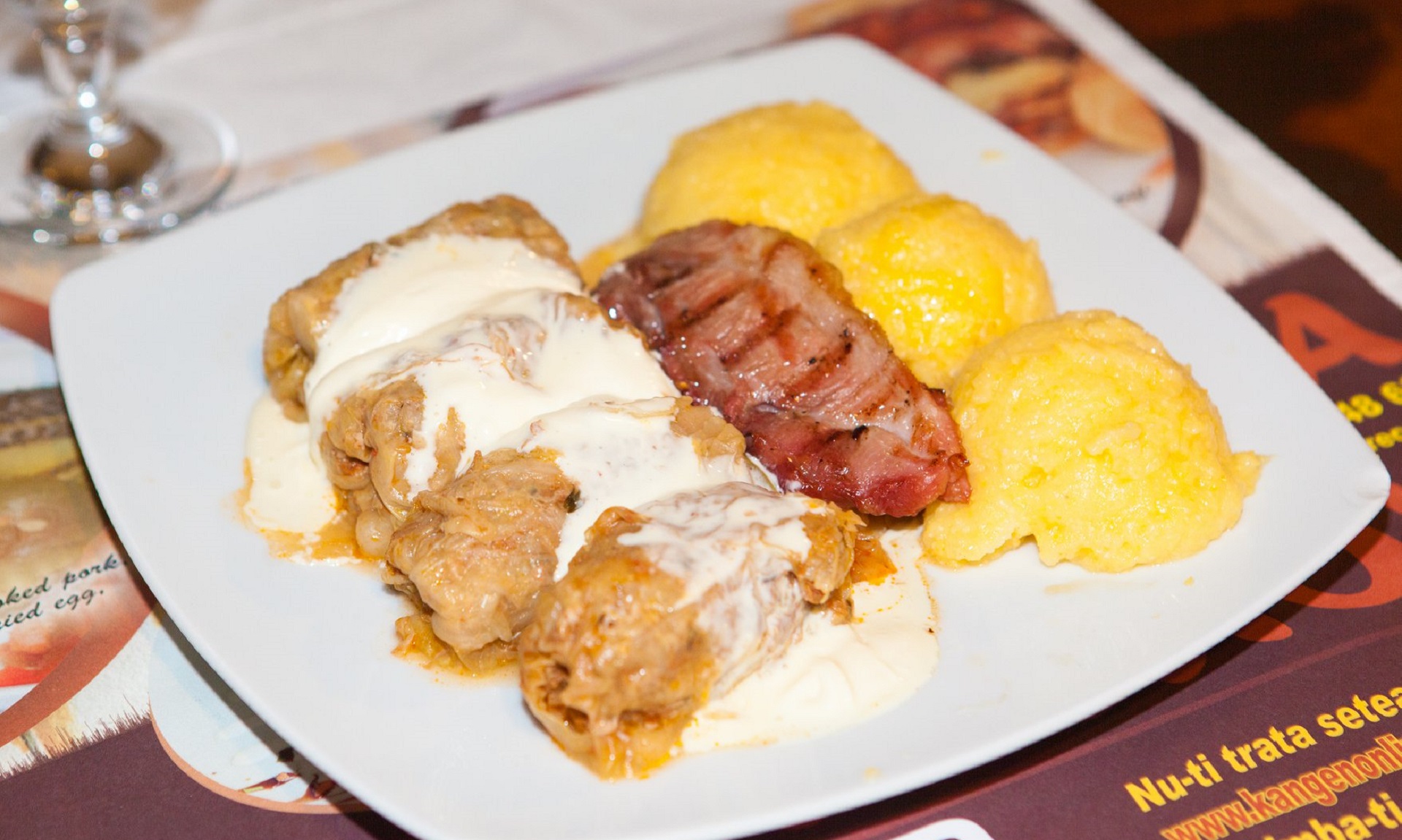
Vegetarian Sarmale are a soulful, plant-based reinterpretation of one of Romania’s most cherished comfort foods, deeply rooted in tradition and family gatherings. Delicate pickled cabbage leaves are gently wrapped around a generous filling of rice, finely chopped mushrooms, caramelized onions, grated carrots, and a carefully balanced blend of herbs and spices. Each roll is layered by hand and slowly simmered, allowing the flavors to deepen and the textures to become perfectly tender.
As they cook, the cabbage releases its subtle tang, blending beautifully with the earthy mushrooms and the natural sweetness of the vegetables. The result is a dish that is hearty and nourishing, yet light and refined — proof that tradition can be honored without relying on meat. Often served warm alongside creamy polenta and finished with a spoonful of plant-based sour cream or yogurt, vegetarian sarmale offer a comforting, home-style experience that captures the essence of Romanian hospitality. Whether enjoyed during fasting periods or simply chosen for their rich flavor, these sarmale celebrate the timeless connection between food, culture, and slow cooking.
A similar dip or spread, salată de icre (‘roe salad’ in Romanian) is also common in Romania and Bulgaria (known as хайвер, or haiver), and Israel (where it is known as ikra). It is made with pike or carp roe, but generally with sunflower or vegetable oil instead of olive oil, sometimes with a thickener like white bread. It is mass-produced and is widely available in grocery shops and supermarkets, as well as being made at home, in which case chopped onions are commonly added. It has a consistency and taste similar to mayonnaise, with the roe taking the place of the egg as protein.[citation needed] The traditional production method of salată de icre is standardized under the Romanian departmental standard N.I.D. 927-70 N 23 and registered as an EU Traditional Speciality Guaranteed under the name “Salată tradițională cu icre de crap”. The roe of this product is for over 50% carp based.[9]
So there you have a humble list of some of the delicious foods that come from Romania. We are hardly scratching the surface however, there is far more excellent cuisine to discover, and you certainly will on our Epicurean tour! If you have any questions, or if you want to organize a bespoke tour of Romania then feel free to get in touch. Romania awaits!
Romanian cuisine is more than a collection of recipes — it is a story told through slow cooking, shared tables, and generations of care. Dishes like vegetarian sarmale remind us that tradition is not fixed in time; it evolves, adapts, and continues to bring people together. Whether rooted in fasting customs, modern dietary choices, or simple curiosity, plant-based interpretations preserve the soul of the original while opening the door to new experiences.
From festive family meals to quiet moments of comfort, these flavors speak a universal language of warmth and authenticity. To taste Romanian food is to taste patience, balance, and respect for ingredients — a reminder that the simplest dishes, prepared with intention, often leave the strongest impressions.